LLM Reference
LLM Reference helps tech leaders quickly find and compare the best AI models and providers for their specific project needs.
Visit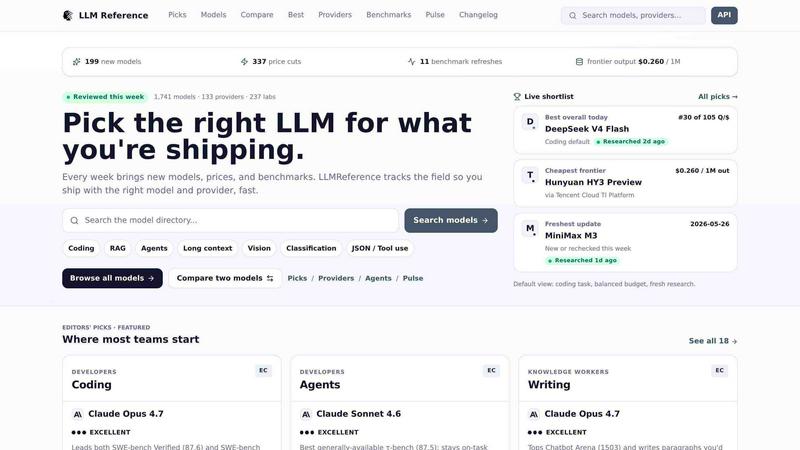
About LLM Reference
LLM Reference is a comprehensive decision-support directory designed specifically for engineers, technical leaders, and AI practitioners who need to select the optimal large language model (LLM) and provider in the rapidly evolving AI landscape. The platform tracks an extensive database of over 1,800 language models from more than 140 providers and 247 research labs, with data refreshed weekly to incorporate new releases, verified price changes, and benchmark updates. The core value proposition is eliminating the time-consuming process of hunting through scattered information sources, enabling teams to ship their AI-powered products with confidence. Whether you are building a coding assistant, an agentic workflow, a writing tool, or a research pipeline, LLM Reference provides a single, trustworthy destination to compare models side-by-side, identify the cheapest pricing for frontier output, and explore curated editors' picks for specific tasks including coding, agents, writing, research, image generation, and video creation. The site is engineered for fast triage, allowing users to quickly identify the right model for their specific job, determine the most cost-effective provider, and return to building their applications. A Pulse feed highlights weekly changes including new models, price cuts, and benchmark refreshes, keeping users informed without information overload. Built by the Data Advantage project and updated daily, LLM Reference has become an essential resource for anyone who needs to stay current with the exploding LLM ecosystem. The platform also features a cheat sheet of most-asked comparisons, live shortlists, and a comprehensive search directory to help users navigate the complex model landscape efficiently.
Features of LLM Reference
Comprehensive Model Directory and Search
The platform maintains an extensive directory of 1,843 language models from 140 providers and 247 labs, all accessible through a powerful search interface. Users can search by model name, provider, task type, or specific capabilities such as coding, RAG, agents, long context, vision, classification, and JSON or tool use. The directory is updated daily with new models, price changes, and benchmark scores, ensuring users always have access to the most current information available in the fast-moving AI landscape.
Editors' Picks and Curated Recommendations
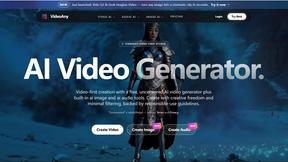
LLM Reference provides expert-curated editors' picks across six major categories: coding, agents, writing, research, image generation, and video creation. Each pick includes detailed reasoning, benchmark scores, and eligibility information. For example, Claude Fable 5 is recommended for coding with 80.3% SWE-bench Pro and 96% SWE-bench Verified scores, while Veo 3.1 is the top video pick offering 30-second clips with native audio at up to 4K resolution through Vertex AI.
Pulse Feed and Weekly Updates
The Pulse feature tracks all weekly changes in the model market, including new model releases, verified provider price reductions, and benchmark refreshes. Users can see real-time statistics such as 177 new models, 53 price cuts, and 368 benchmark refreshes in a given week. This feed allows users to stay informed about market movements without visiting multiple sources or subscribing to noisy newsletters.
Side-by-Side Model Comparison
The compare tool enables users to evaluate two models directly against each other, examining their performance across multiple benchmarks, pricing structures, and provider options. Popular comparisons include Claude Fable 5 versus Claude Opus 4.8, GPT-5.5 versus Gemini 3.1 Pro Preview, and Claude Opus 4.8 versus GPT-5.3-Codex. This feature helps teams make data-driven decisions quickly.
Use Cases of LLM Reference
Selecting the Best Model for Production Coding Tasks
Engineering teams building AI-assisted coding tools can use LLM Reference to identify the most capable model for their specific requirements. For example, Claude Fable 5 scores 80.3% on SWE-bench Pro and 96% on SWE-bench Verified, making it the top pick for non-trivial engineering tasks. Users can compare this against Claude Opus 4.8 or GPT-5.5 to find the best balance of performance and cost for their production environment.
Identifying the Most Cost-Effective Frontier Provider
Teams looking to minimize operational costs can use the frontier pricing feature to find the cheapest provider for top-tier model output. The platform tracks real-time pricing, with the current cheapest frontier output at $0.260 per 1 million tokens through Hunyuan HY3 Preview via Tencent Cloud TI Platform. This enables budget-conscious teams to access cutting-edge models without overspending.
Building Agentic Workflows with Reliable Models
Developers creating agent-based systems need models that stay on-task across long tool loops and self-correct without prompting. LLM Reference's agents board highlights Claude Sonnet 4.6 as the best generally-available option with a tau-bench score of 87.5, while also listing Claude Fable 5 and GLM-5 as strong alternatives. This allows teams to select the most reliable model for their specific agent architecture.
Benchmarking Research and Knowledge Work
Researchers and knowledge workers can use the platform to identify models excelling in specific domains such as research, writing, summarization, translation, and data analysis. For instance, Claude Fable 5 leads in research with a GDPval-AA ELO of 1932, while Gemini 3 Pro is recommended for summarization and translation tasks. The platform provides detailed benchmark scores to support evidence-based model selection.
Frequently Asked Questions
How often is the model data updated on LLM Reference?
The platform updates its data daily, with a weekly Pulse feed highlighting the most significant changes. This includes new model releases, verified provider price reductions, and benchmark refreshes. Users can expect to see updates within 24 hours of any major announcement or change in the LLM ecosystem.
What types of models and providers are tracked?
LLM Reference tracks over 1,843 language models from 140 providers and 247 research labs. This includes both proprietary models from major companies like Anthropic, Google, and OpenAI, as well as open-weight models from research labs and community contributors. The directory covers models across all major categories including coding, agents, vision, long context, and multimodal capabilities.
How are the Editors' Picks determined?
Editors' Picks are curated by the LLM Reference team based on a combination of benchmark performance, real-world testing, pricing efficiency, and community feedback. Each pick includes detailed reasoning, specific benchmark scores, and eligibility information. The picks are reviewed and updated regularly as new models and benchmarks become available, ensuring recommendations remain current and reliable.
Can I compare models side-by-side on the platform?
Yes, LLM Reference includes a dedicated comparison tool that allows users to evaluate two models directly against each other. The comparison includes performance benchmarks, pricing information, provider details, and task-specific suitability. Popular comparisons are also featured in the cheat sheet section, helping users quickly access the most requested model evaluations.
Pricing of LLM Reference
LLM Reference itself is free to use. The platform does not charge users for accessing the model directory, comparison tools, editors' picks, or Pulse feed. All pricing information displayed on the site refers to the costs charged by third-party model providers such as Anthropic, Google, OpenAI, and Tencent Cloud for API access to their models. Users can freely browse all 1,843 models, 140 providers, and 247 labs without any subscription or usage fees. The platform is supported as part of the Data Advantage project and is updated daily to provide the most current information to the AI community.